

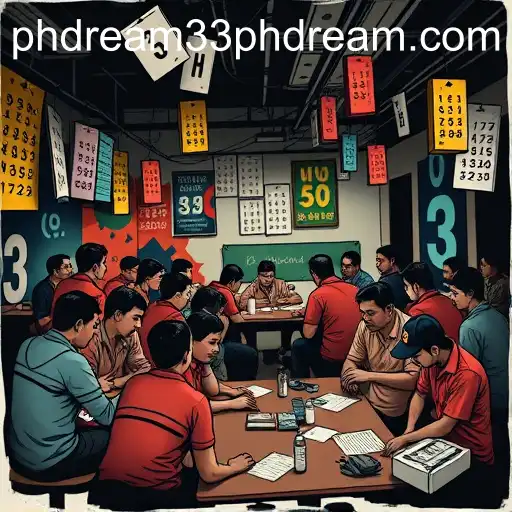

Jueteng is a term often whispered and cloaked in secrecy amidst the bustling streets and quiet barangays in the Philippines. Despite its illicit nature, it has been a significant part of Filipino culture and society. It is a game of numbers, relying on chance, akin to a lottery but thriving in the underground gambling scene. In recent years, modern adaptations have emerged, with one of the notable evolutions being the PH Dream 33.
The origins of Jueteng trace back to the 19th century during the Spanish colonial era, when it was believed to have been introduced by Chinese traders. Over the years, it evolved into a staple form of gambling for many Filipinos who were drawn to its simplicity. Players would bet on a pair of numbers between 1 and 37. Winning numbers are typically drawn twice a day, offering quick turnaround and instant gratification for the winners.
Despite its illegal status under Philippine law, Jueteng remains rampant due to the minimal setup required and the substantial profits it generates for operators. The gameplay is intrinsically simple, which appeals to the masses, especially within the provinces where formal lottery outlets may be scarce. For many, it is an attractive pastime with the promise of changing their lives overnight—mirroring the elusive dreams sought by so many.
Jueteng has often found itself at the heart of controversy, primarily due to its connections with corruption. The massive revenues from Jueteng operations are said to line the pockets of local officials and law enforcement agents who turn a blind eye for a share of the profits. This has led to a complex tale of institutional corruption tied to the social fabric in numerous communities.
The potential for extortion and coercion traditionally associated with Jueteng poses socio-economic challenges, impacting the marginalized members of society most. Despite government crackdowns and the implementation of legal alternatives like the PCSO Lottery, Jueteng’s allure continues to pervade neighborhoods, driven by economic disparity and the promise of more immediate rewards.
In the digital age, where accessibility grows in leaps and bounds, gambling has similarly evolved. Enter PH Dream 33, a modern counterpart to the traditional game of Jueteng. While exact details of its operations remain somewhat veiled, it represents a transformation of the clandestine gaming system merged with technological innovation.
PH Dream 33 is purported to leverage online platforms to streamline gameplay, opportunities, and payout systems. This evolution signifies an adaptation to the modern gambler's needs, blending technology with the well-trodden roads of tradition. It appeals largely to younger demographics who are digital natives and have quick access to such platforms.
The infusion of technology into gambling raises further questions about regulation and control. Where Jueteng’s traditional form is relatively localized and thus perceived as more controllable, its digital counterpart introduces new layers of complexity. The online space is vast, harder to monitor, and regulatory frameworks have struggled to keep pace with rapid technology advancements.
PH Dream 33, by creating a virtual platform for Jueteng-style play, presents new challenges in terms of cybersecurity, user verification, and most importantly, enforcing gambling age restrictions. As digital platforms gain traction, the Philippine government's efforts to curtail illegal gambling must innovate similarly to remain effective and ensure player protection.
Jueteng's continuity in Philippine society is a testament to its deeply embedded cultural roots. Any attempt to eradicate it completely must consider this cultural dimension alongside socioeconomic factors. For PH Dream 33, as well as potential future iterations of digital gambling experiences, the path forward will likely involve balancing innovation with responsible gaming practices.
Policymakers are thus faced with the dual challenge of addressing the socio-economic factors that sustain Jueteng while also pioneering robust regulatory frameworks for digital gambling. Addressing these issues necessitates dialogue between stakeholders across the board—from community members and local officials to tech innovators and independent watchdogs.
As the Filipinos continue to dream, whether through Jueteng or PH Dream 33, the narrative remains centered around the quest for hope, fortune, and a better life. Understanding this facilitates a comprehensive approach to tackling the issue—one where regulation, fairness, and cultural sensitivity are forefronted.

Dive into the captivating universe of DivineDragon, uncover its intriguing gameplay, and unravel its celestial mysteries.

Discover the vibrant world of CircusJoker4096, a riveting game blending circus excitement with strategic challenges, and explore its intriguing rules and gameplay.

Dive into the enchanting world of ChristmasReachBonusBuy, a thrilling game that blends holiday spirit with exciting gameplay mechanics. Discover its unique features, engaging rules, and how it connects to current global events.

Explore the thrilling world of FieryFruitsMoreSpins, a captivating game that combines vibrant visuals with engaging gameplay. Learn about the game's unique features, rules, and how it has captivated audiences, including its popularity in the PH Dream 33 gaming community.

Explore the fascinating underwater realm of 'Mermaid: A PH Dream 33 Adventure', a captivating game that immerses players in a world of mystery and magic.

Explore the captivating world of CaishenWins with PH Dream 33 in an engaging and original article detailing the game's description, introduction, and rules.
